Cao Wei · Secretary
Du Ji
courtesy name 伯侯 · 163–224
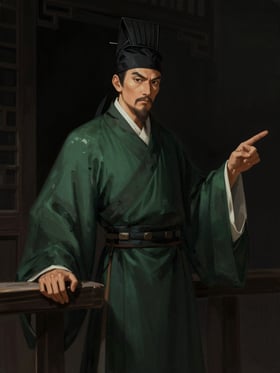
Du Ji, a Cao Wei official, pacified Hedong, governed with leniency, secured army provisions, and died in a boating accident late in life.
In the sources
Where the books name Du Ji
History · vol. 2Records of the Three Kingdoms
秋七月,冀州大蝗,民饑,使尚書杜畿持節開倉廩以振之。八月,蜀大將黃權率衆降。…
Read the whole paragraph
秋七月,冀州大蝗,民饑,使尚書杜畿持節開倉廩以振之。八月,蜀大將黃權率衆降。〈《魏書》曰:權及領南郡太守史郃等三百一十八人,詣荊州刺史奉上所假印綬、棨戟、幢麾、牙門、鼓車。權等詣行在所,帝置酒設樂,引見於承光殿。權、郃等人人前自陳,帝爲論說軍旅成敗去就之分,諸將無不喜恱。賜權金帛、車馬、衣裘、帷帳、妻妾,下及偏裨皆有差。拜權爲侍中鎮南將軍,封列侯,即日召使驂乘;及封史郃等四十二人皆爲列侯,爲將軍郎將百餘人。〉
History · vol. 16Records of the Three Kingdoms
杜畿字伯侯,京兆杜陵人也。〈《傅子》曰:畿,汉御史大夫杜延年之后。…
Read the whole paragraph
杜畿字伯侯,京兆杜陵人也。〈《傅子》曰:畿,汉御史大夫杜延年之后。延年父周,自南阳徙茂陵,延年徙杜陵,子孙世居焉。〉少孤,继母苦之,以孝闻。年二十,为郡功曹,守郑县令。县囚系数百人,畿亲临狱,裁其轻重,尽决遣之,虽未悉当,郡中奇其年少而有大意也。举孝廉,除汉中府丞。会天下乱,遂弃官客荆州,建安中乃还。荀彧进之太祖,〈《傅子》曰:畿自荆州还,后至许,见侍中耿纪,语终夜。尚书令荀彧与纪比屋,夜闻畿言,异之,旦遣人谓纪曰:“有国士而不进,何以居位?”既见畿,知之如旧相识者,遂进畿於朝。〉太祖以畿为司空司直,迁护羌校尉,使持节,领西平太守。〈《魏略》曰:畿少有大志。在荆州数岁,继母亡后,以三辅开通,负其母丧北归。道为贼所劫略,众人奔走,畿独不去。贼射之,畿请贼曰:“卿欲得财耳,今我无物,用射我何为邪?”贼乃止。畿到乡里,京兆尹张时,河东人也,与畿有旧,署为功曹。尝嫌其阔达,不助留意於诸事,言此家疏诞,不中功曹也。畿窃云:“不中功曹,中河东守也。”〉
History · vol. 16Records of the Three Kingdoms
…彧曰:“杜畿其人也。”〈《傅子》曰:彧称畿勇足以当大难,智能应变,其可试之。…
Read the whole paragraph
太祖既定河北,而高幹举并州反。时河东太守王邑被徵,河东人卫固、范先外以请邑为名,而内实与幹通谋。太祖谓荀彧曰:“关西诸将,恃险与马,征必为乱。张晟寇殽、渑间,南通刘表,固等因之,吾恐其为害深。河东被山带河,四邻多变,当今天下之要地也。君为我举萧何、寇恂以镇之。”彧曰:“杜畿其人也。”〈《傅子》曰:彧称畿勇足以当大难,智能应变,其可试之。〉於是追拜畿为河东太守。固等使兵数千人绝陕津,畿至不得渡。太祖遣夏侯惇讨之,未至。或谓畿曰:“宜须大兵。”畿曰:“河东有三万户,非皆欲为乱也。今兵迫之急,欲为善者无主,必惧而听於固。固等势专,必以死战。讨之不胜,四邻应之,天下之变未息也;讨之而胜,是残一郡之民也。且固等未显绝王命,外以请故君为名,必不害新君。吾单车直往,出其不意。固为人多计而无断,必伪受吾。吾得居郡一月,以计縻之,足矣。”遂诡道从郖津度。〈郖音豆。《魏略》曰:初,畿与卫固少相狎侮,固尝轻畿。畿尝与固博而争道,畿尝谓固曰:“仲坚,我今作河东也。”固褰衣骂之。及畿之官,而固为郡功曹。张时故任京兆。畿迎司隶,与时会华阴,时、畿相见,於仪当各持版。时叹曰:“昨日功曹,今为郡将也!”〉范先欲杀畿以威众。〈《傅子》曰:先云:“既欲为虎而恶食人肉,失所以为虎矣。今不杀,必为后患。”〉且观畿去就,於门下斩杀主簿已下三十餘人,畿举动自若。於是固曰:“杀之无损,徒有恶名;且制之在我。”遂奉之。畿谓卫固、范先曰:“卫、范,河东之望也,吾仰成而已。然君臣有定义,成败同之,大事当共平议。”以固为都督,行丞事,领功曹;将校吏兵三千餘人,皆范先督之。固等喜,虽阳事畿,不以为意。固欲大发兵,畿患之,说固曰:“夫欲为非常之事,不可动众心。今大发兵,众必扰,不如徐以赀募兵。”固以为然,从之,遂为赀调发,数十日乃定,诸将贪多应募而少遣兵。又入喻固等曰:“人情顾家,诸将掾吏,可分遣休息,急缓召之不难。”固等恶逆众心,又从之。於是善人在外,阴为己援;恶人分散,各还其家,则众离矣。会白骑攻东垣,高幹入濩泽,上党诸县杀长吏,弘农执郡守,固等密调兵未至。畿知诸县附己,因出,单将数十骑,赴张辟拒守,吏民多举城助畿者,比数十日,得四千餘人。固等与幹、晟共攻畿,不下,略诸县,无所得。会大兵至,幹、晟败,固等伏诛,其餘党与皆赦之,使复其居业。
On the boards
Where this person ranks on each board.
Historical Record
Du Ji, courtesy name Bohou, was from Duling, Jingzhao. Orphaned at a young age, he was known for his filial devotion to his stepmother. At twenty, he became an assistant in the commandery administration and acting magistrate of Zheng County. He personally heard prisoners’ cases, judged the severity of their offenses, and released many of them. People in the commandery considered him young but ambitious. He was later recommended as a Filial and Incorrupt official and appointed assistant administrator of Hanzhong. When the realm fell into turmoil, he resigned and lived as a guest in Jing Province. During the Jian’an era, he returned and, on Xun Yu’s recommendation, entered Cao Cao’s administration. He subsequently served as Director of the Secretariat’s office in the Minister of Works’ staff, Colonel Protector of the Qiang, and concurrently Administrator of Xiping.
After Cao Cao Pacifies Hebei, Gao Gan rose in rebellion, and Wei Gu and Fan Xian in Hedong secretly communicated with him. Du Ji was appointed Administrator of Hedong. Though Wei Gu’s forces blocked the ferry crossing, he still made his way across the river by a roundabout route in a single carriage. He judged that a direct assault would drive the people to join the rebellion, so he resorted to expedient measures to enter the commandery seat. He temporarily accepted the offices granted by Wei Gu and Fan Xian, slowed conscription, dismissed officials, and quietly won the people’s support. When circumstances shifted, he led several dozen cavalrymen to Zhang Pi’s position to hold off the rebels. More and more officials and people in the commandery rallied to him. After Cao Cao’s forces arrived and the rebellion was put down, Du Ji pardoned the remaining rebels and allowed them to return to their livelihoods.
Once Hedong was pacified, Du Ji governed with leniency and benevolence. When disputes arose, he personally explained the principles at issue and sent the parties home to reflect. He also commended filial sons, virtuous women, and dutiful grandsons, and encouraged the people to raise cattle, horses, chickens, and pigs to improve their livelihoods. After the people had grown prosperous, he trained the troops, established a school, and personally taught from the Classics. During the rebellions of Han Sui and Ma Chao, Hedong bordered rebel territory, yet the people remained steadfast. Cao Cao’s western campaign depended on grain supplies from Hedong, and more than 200,000 hu of grain remained after the campaign. Cao Cao praised Du Ji’s accomplishments and increased his salary. Du Ji governed Hedong for sixteen years, and the commandery was often ranked among the best in the realm.
After the establishment of Wei, Du Ji served as a Secretariat official. When Emperor Wen ascended the throne, he granted Du Ji the title of Marquis Within the Passes. Du Ji was later promoted to Marquis of Fengleting and appointed Colonel Director of Retainers in Sili Province. When Emperor Wen campaigned against Wu, Du Ji served as Deputy Director of the Secretariat and oversaw affairs in the capital during the emperor’s absence. While carrying out an imperial order to test-drive a royal tower ship on the Tao River, the vessel was caught in a storm and sank, and Du Ji perished. Emperor Wen wept for him and posthumously appointed him Grand Master of the Palace, granting him the posthumous title Marquis Dai. In the second year of the Ganlu era, Yue Xiang of Hedong memorialized Du Ji’s legacy, and the court consequently made Du Ji’s son, Du Yu, Marquis of Fengleting.
In the Novel
The novel does not depict this person. The available materials provide no episodes or characterization of Du Ji in works such as Romance of the Three Kingdoms, so no actions or words can be added to the novel’s account, nor should the historical biography be rewritten as scenes from the novel.
Key Relationships
Du Ji’s relationship with the Cao Wei regime ran throughout his career: recommended by Xun Yu, he was appointed by Cao Cao, and in Hedong he suppressed rebellion, improved people’s livelihoods, and secured military provisions. After entering the service of Wei, he held posts including Secretariat official and oversaw the court’s affairs while Emperor Wen was away. Cao Cao commended his governance and the provisions he supplied to the army, while Emperor Wen posthumously appointed him Grand Master of the Palace and granted him the title Marquis Dai after his death.
In Hedong, Wei Gu and Fan Xian were both obstacles when Du Ji first took office and targets of his efforts to maneuver against and divide their forces. After the rebellion was put down, Du Ji pardoned the remaining rebels, with an eye toward restoring life in the commandery and its counties. Yue Xiang was connected with Du Ji’s promotion of education: Du Ji had appointed him to teach younger students, and in his later years Yue Xiang memorialized Du Ji’s legacy.
Signature Scenes
Entering Hedong in a single carriage. With the ferry crossing blocked and reinforcements yet to arrive, Du Ji did not rashly bring military force to bear. Judging that the people were not all intent on joining the rebellion, he chose a roundabout route across the river and used a temporary compromise to buy time. He slowed conscription and dismissed officials, gradually depriving the hostile forces of the means to gather followers. Only after more people in the commandery had rallied to him did he send troops to hold them off. This episode encapsulates his ability to read the moment and restore order through strategy rather than brute force.
Pacifying the people through benevolence and providing for the army through prosperity. Du Ji linked the promotion of good conduct, livestock raising, education, and public order. Persuasion reduced the number of disputes; as households prospered through livestock-raising measures, he went on to train the troops and personally teach from the Classics. Later, even during the turmoil caused by Han Sui and Ma Chao, Hedong remained stable and supplied grain for Cao Cao’s western campaign, a vivid testament to the results of Du Ji’s local governance.
Caught in a storm while testing a ship on the Tao River. In his later years, Du Ji was ordered to test-drive a royal tower ship and died when it sank in a storm. Emperor Wen issued an edict mourning him, likened his death in the line of duty to that of the ancients who had devoted themselves to their posts, and posthumously appointed him Grand Master of the Palace and granted him the title Marquis Dai. This ending carried his career from years of maintaining order in the provinces to service in the capital, and left behind Emperor Wen’s remembrance of his loyalty and diligence.
Lines
- 史 ch.16 §18
“河东有三万户,非皆欲为乱也。今兵迫之急,欲为善者无主,必惧而听於固。固等势专,必以死战。讨之不胜,四邻应之,天下之变未息也;讨之而胜,是残一郡之民也。且固等未显绝王命,外以请故君为名,必不害新君。吾单车直往,出其不意。固为人多计而无断,必伪受吾。吾得居郡一月,以计縻之,足矣。”
- 史 ch.16 §19
“民富矣,不可不教也。”
- Family
- Friends
- Enemies
- Teacher & student
- Other

Continue
Du Shu
Child
Relationship timeline3 entries ▸
History · vol. 16
- Wei Gu§18
Enemy
drove straight into Hedong in a single carriage and feigned serving him; held him there by a stratagem
- Fan Xian§18
Enemy
He first had more than thirty people, from the Chief Clerk downward, executed at his gate to make a show of force; Ji remained composed in his conduct
- Du Shu§21
Child
Son; succeeded to his title