Cao Wei
Shi Jian
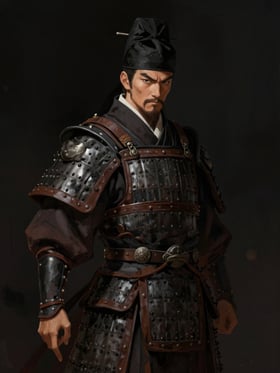
Shi Jian, a Cao Wei general, nearly escaped with Gao Qian during the retreat across the river.
In the sources
Where the books name Shi Jian
History · vol. 14Records of the Three Kingdoms
…賊兩頭並前,官兵一道引去,不時得洩,將軍石建、高遷僅得自免。…
Read the whole paragraph
帝悟昭言,即詔尚等促出。賊兩頭並前,官兵一道引去,不時得洩,將軍石建、高遷僅得自免。軍出旬日,江水暴長。帝曰:「君論此事,何其審也!正使張、陳當之,何以復加。」五年,徙封成都鄉侯,拜太常。其年,徙光祿大夫、給事中。從大駕東征,七年還,拜太僕。明帝即位,進爵樂平侯,邑千戶,轉衛尉。分邑百戶,賜一子爵關內侯。
History · vol. 14Records of the Three Kingdoms
武皇帝智勇過人,而用兵畏敵,不敢輕之若此也。夫兵好進惡退,常然之數。…
Read the whole paragraph
武皇帝智勇過人,而用兵畏敵,不敢輕之若此也。夫兵好進惡退,常然之數。平地無險,猶尚艱難,就當深入,還道宜利,兵有進退,不可如意。今屯渚中,至深也;浮橋而濟,至危也;一道而行,至狹也:三者兵家所忌,而今行之。賊頻攻橋,誤有漏失,渚中精銳,非魏之有,將轉化為吳矣。臣私慼之,忘寢與食,而議者怡然不以為憂,豈不惑哉!加江水向長,一旦暴增,何以防禦?就不破賊,尚當自完。奈何乘危,不以為懼?事將危矣,惟陛下察之!
Shi Jian was a Cao Wei general mentioned in accounts in the Records of the Three Kingdoms; he does not appear in the novel.
Deeds
When the Cao army withdrew from Zhu, Shi Jian and Gao Qian barely managed to escape (according to historical records).
Relationships
- He escaped alongside Gao Qian during the Cao army’s withdrawal.
On the boards
Where this person ranks on each board.
Continue
Cao Wei
Their side
Cao Wei was a regime whose state name was “Wei” during the Three Kingdoms period. In the late Eastern Han, Cao Cao gradually gained control of the court, and was successively enfeoffed as Duke of Wei and King of Wei, laying the foundations for the Cao clan’s regime. In the twenty-fifth year of Jian’an (220), Cao Pi succeeded to the title of King of Wei, accepted Emperor Xian of Han’s abdication, and ascended the throne as emperor. He adopted the reign title Huangchu and established the state name Great Wei; Emperor Xian of Han was enfeoffed as Duke of Shanyang. Cao Rui succeeded Cao Pi; as Cao Rui had no sons, he adopted Cao Fang as his heir. When Cao Fang ascended the throne, the Grand General Cao Shuang and Grand Commandant Sima Yi assisted in governing. Cao Fang was later deposed, and Cao Mao was welcomed to the throne; after Cao Mao’s death, Cao Huan succeeded him. The Cao Wei throne was successively held by Cao Pi, Cao Rui, Cao Fang, Cao Mao, and Cao Huan.