Cao Wei
Chunyu Jun
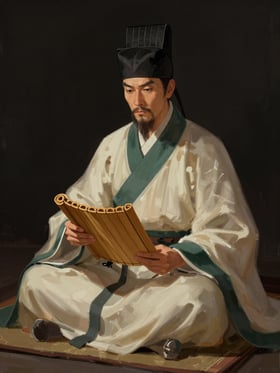
Wei Doctor of the Changes Chunyu Jun was known for answering Gao Gui Xianggong’s questions at the Imperial Academy in the first year of Ganlu.
In the sources
Where the books name Chunyu Jun
History · vol. 4Records of the Three Kingdoms
…易博士淳于俊對曰:「包羲因燧皇之圖而制八卦,神農演之為六十四,黃帝、堯、舜通其變,三代隨時,質文各繇其事。…
Read the whole paragraph
丙辰,帝幸太學,問諸儒曰:「聖人幽贊神明,仰觀俯察,始作八卦,後聖重之為六十四,立爻以極數,凡斯大義,罔有不備,而夏有連山,殷有歸藏,周曰周易,易之書,其故何也?」易博士淳于俊對曰:「包羲因燧皇之圖而制八卦,神農演之為六十四,黃帝、堯、舜通其變,三代隨時,質文各繇其事。故易者,變易也,名曰連山,似山出內雲氣,連天地也;歸藏者,萬事莫不歸藏於其中也。」帝又曰:「若使包羲因燧皇而作易,孔子何以不云燧人氏沒包羲氏作乎?」俊不能荅。帝又問曰:「孔子作彖、象,鄭玄作注,雖聖賢不同,其所釋經義一也。今彖、象不與經文相連,而注連之,何也?」俊對曰;「鄭玄合彖、象於經者,欲使學者尋省易了也。」帝曰:「若鄭玄合之,於學誠便,則孔子曷為不合以了學者乎?」俊對曰:「孔子恐其與文王相亂,是以不合,此聖人以不合為謙。」帝曰:「若聖人以不合為謙,則鄭玄何獨不謙邪?」俊對曰:「古義弘深,聖問奧遠,非臣所能詳盡。」帝又問曰:「繫辭云『黃帝、堯、舜垂衣裳而天下治』,此包羲、神農之世為無衣裳。但聖人化天下,何殊異爾邪?」俊對曰:「三皇之時,人寡而禽獸衆,故取其羽皮而天下用足,及至黃帝,人衆而禽獸寡,是以作為衣裳以濟時變也。」帝又問:「乾為天,而復為金,為玉,為老馬,與細物並邪?」俊對曰:「聖人取象,或遠或近,近取諸物,遠則天地。」
On the boards
Where this person ranks on each board.
Chunyu Jun was a Doctor of the Book of Changes in the state of Wei. He is mentioned in connection with Emperor Gao Gui of Xiang’s visit to the Imperial Academy in the first year of the Ganlu era; he does not appear in the novel.
Deeds
- In the first year of the Ganlu era, Emperor Gao Gui of Xiang visited the Imperial Academy. Chunyu Jun, serving as a Doctor of the Book of Changes, answered the emperor’s questions about the Changes, explaining the names of the Lianshan and Guicang, how the text and commentaries of the Changes were read together, and the origins of clothing and the use of images. When asked about the account that Baoxi composed the Changes following the Fire Emperor, which did not agree with what Confucius recorded, he could not answer. He later replied that his learning was limited. (Recorded in the histories.)
Relationships
- He discussed the Changes with Emperor Gao Gui of Xiang at the Imperial Academy.
Lines
- 史 ch.4 §43→ Cao Mao
「包羲因燧皇之圖而制八卦,神農演之為六十四,黃帝、堯、舜通其變,三代隨時,質文各繇其事。故易者,變易也,名曰連山,似山出內雲氣,連天地也;歸藏者,萬事莫不歸藏於其中也。」
Continue
Cao Wei
Their side
Cao Wei was a regime whose state name was “Wei” during the Three Kingdoms period. In the late Eastern Han, Cao Cao gradually gained control of the court, and was successively enfeoffed as Duke of Wei and King of Wei, laying the foundations for the Cao clan’s regime. In the twenty-fifth year of Jian’an (220), Cao Pi succeeded to the title of King of Wei, accepted Emperor Xian of Han’s abdication, and ascended the throne as emperor. He adopted the reign title Huangchu and established the state name Great Wei; Emperor Xian of Han was enfeoffed as Duke of Shanyang. Cao Rui succeeded Cao Pi; as Cao Rui had no sons, he adopted Cao Fang as his heir. When Cao Fang ascended the throne, the Grand General Cao Shuang and Grand Commandant Sima Yi assisted in governing. Cao Fang was later deposed, and Cao Mao was welcomed to the throne; after Cao Mao’s death, Cao Huan succeeded him. The Cao Wei throne was successively held by Cao Pi, Cao Rui, Cao Fang, Cao Mao, and Cao Huan.