Cao Wei
Meng Guan
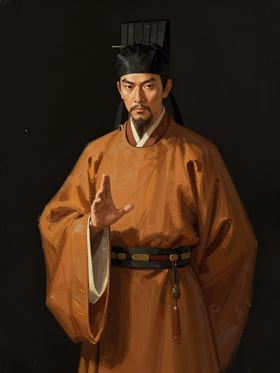
Meng Guan, Cao Wei's Commandant of the Guards at Yongning, is known for recommending Guan Ning with others in Zhengshi 2.
In the sources
Where the books name Meng Guan
History · vol. 11Records of the Three Kingdoms
正始二年,太僕陶丘一、永寧衞尉孟觀、侍中孫邕、中書侍郎王基薦寧曰:
Meng Guan was the Commandant of the Palace Guards in Yongning under Cao Wei. The chapter in which he appears is not recorded in the historical materials, and he does not appear in the novel.
Deeds
In the second year of Zhengshi, Meng Guan, together with Taoqiu Yi, Sun Yong, and Wang Ji, recommended Guan Ning, praising his hidden virtue and lofty integrity. They urged the court to send silk and jade and extend a formal invitation to him (as recorded in the historical sources).
Relationships
- Together with Taoqiu Yi, Sun Yong, and Wang Ji, he recommended Guan Ning.
On the boards
Where this person ranks on each board.

Continue
Cao Wei
Their side
Cao Wei was a regime whose state name was “Wei” during the Three Kingdoms period. In the late Eastern Han, Cao Cao gradually gained control of the court, and was successively enfeoffed as Duke of Wei and King of Wei, laying the foundations for the Cao clan’s regime. In the twenty-fifth year of Jian’an (220), Cao Pi succeeded to the title of King of Wei, accepted Emperor Xian of Han’s abdication, and ascended the throne as emperor. He adopted the reign title Huangchu and established the state name Great Wei; Emperor Xian of Han was enfeoffed as Duke of Shanyang. Cao Rui succeeded Cao Pi; as Cao Rui had no sons, he adopted Cao Fang as his heir. When Cao Fang ascended the throne, the Grand General Cao Shuang and Grand Commandant Sima Yi assisted in governing. Cao Fang was later deposed, and Cao Mao was welcomed to the throne; after Cao Mao’s death, Cao Huan succeeded him. The Cao Wei throne was successively held by Cao Pi, Cao Rui, Cao Fang, Cao Mao, and Cao Huan.