Cao Wei
Li Shao
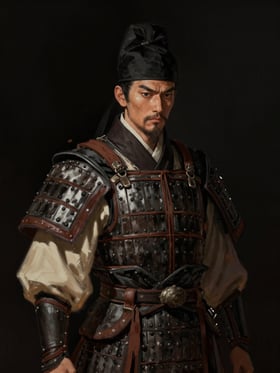
Li Shao, a Shu Han general, surrendered to Wei with Ju An in the 12th year of Yanxi.
In the sources
Where the books name Li Shao
History · vol. 33Records of the Three Kingdoms
…將軍句安、李韶降魏。
Read the whole paragraph
十二年春正月,魏誅大將軍曹爽等,右將軍夏侯霸來降。夏四月,大赦。秋,衛將軍姜維出攻雍州,不克而還。將軍句安、李韶降魏。
On the boards
Where this person ranks on each board.
Li Shao was a general of Shu Han. His deeds are recorded in Records of the Three Kingdoms, Volume 33; he does not appear in the novel.
Deeds
In the autumn of the twelfth year of Yanxi, Jiang Wei launched an attack on Yongzhou but failed to achieve victory and withdrew. Li Shao and Ju An surrendered to Wei together (according to historical records).
Relationship
- Surrendered to Wei together with Ju An.

Continue
Cao Wei
Their side
Cao Wei was a regime whose state name was “Wei” during the Three Kingdoms period. In the late Eastern Han, Cao Cao gradually gained control of the court, and was successively enfeoffed as Duke of Wei and King of Wei, laying the foundations for the Cao clan’s regime. In the twenty-fifth year of Jian’an (220), Cao Pi succeeded to the title of King of Wei, accepted Emperor Xian of Han’s abdication, and ascended the throne as emperor. He adopted the reign title Huangchu and established the state name Great Wei; Emperor Xian of Han was enfeoffed as Duke of Shanyang. Cao Rui succeeded Cao Pi; as Cao Rui had no sons, he adopted Cao Fang as his heir. When Cao Fang ascended the throne, the Grand General Cao Shuang and Grand Commandant Sima Yi assisted in governing. Cao Fang was later deposed, and Cao Mao was welcomed to the throne; after Cao Mao’s death, Cao Huan succeeded him. The Cao Wei throne was successively held by Cao Pi, Cao Rui, Cao Fang, Cao Mao, and Cao Huan.