Sun Quan's Faction · Director of Selection
Lu Mao
courtesy name 子璋 · –239
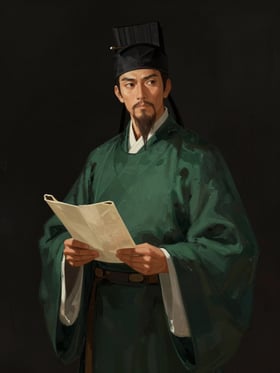
Lu Mao, Lu Xun’s younger brother in Eastern Wu, was known for his generosity and twice urging Sun Quan not to campaign against Gongsun Yuan.
In the sources
Where the books name Lu Mao
History · vol. 52Records of the Three Kingdoms
承字子直,嘉禾中與舅陸瑁俱以禮征。權賜丞相雍書曰:「貴孫子直,令問休休,至與相見,過於所聞,爲君嘉之。」…
Read the whole paragraph
承字子直,嘉禾中與舅陸瑁俱以禮征。權賜丞相雍書曰:「貴孫子直,令問休休,至與相見,過於所聞,爲君嘉之。」拜騎都尉,領羽林兵。後爲呉郡西部都尉,與諸葛恪等共平山越,別得精兵八千人,還屯軍章阬,拜昭義中郎將,入爲侍中。芍陂之役,拜奮威將軍,出領京下督。數年,與兄譚,張休等懼徙交州,年三十七卒。
History · vol. 57Records of the Three Kingdoms
陸瑁字子璋,丞相遜弟也。少好學篤義。陳國陳融、陳留濮陽逸、沛郡蔣纂、廣陵袁迪等,皆單貧有志。…
Read the whole paragraph
陸瑁字子璋,丞相遜弟也。少好學篤義。陳國陳融、陳留濮陽逸、沛郡蔣纂、廣陵袁迪等,皆單貧有志。就瑁游處,〈迪孙晔,字思光,作《献帝春秋》,云迪与张纮等俱过江,迪父绥为太傅掾,张超之讨董卓,以绥领广陵事。〉瑁割少分甘,與同豐約。及同郡徐原,爰居會稽,素不相識,臨死遺書,托以孤弱,瑁為起立墳墓,收導其子,又瑁從父績早亡,二男一女,皆數歲以還,瑁迎攝養,至長乃別。州郡辟舉,皆不就。時尚書暨艷盛明臧否,差斷三署。頗揚人暗昧之失,以顯其謫。瑁與書曰:"夫聖人嘉善矜愚,忘過記功,以成美化。加今王業始建,將一大統,此乃漢高棄瑕錄用之時也,若令善惡異流,貴汝穎月旦之評,誠可以厲俗明教,然恐未易行也。宜遠模仲尼之泛愛,中則郭泰之弘濟,近有益於大道也。"艷不能行,卒以致敗。
History · vol. 57Records of the Three Kingdoms
臣聞聖王之御遠夷,羈縻而已,不常保有,故古者制地,謂之荒服,言慌惚無常,不可保也。…
Read the whole paragraph
臣聞聖王之御遠夷,羈縻而已,不常保有,故古者制地,謂之荒服,言慌惚無常,不可保也。今淵東夷小丑,屏在海隅,雖托人面,與禽獸無異。國家所為不愛貨寶遠以加之者,非嘉其德義也,誠欲誘納愚弄,以規其馬耳。淵之驕黠,恃遠負命,此乃荒貊常態,豈足深怪?昔漢諸帝亦嘗銳意以事外夷,馳使散貨,充滿西域,雖時有恭從,然其使人見害,財貨並沒,不可勝數。今陛下不忍悁悁之忿,欲越巨海,身踐其土,群臣愚議,竊謂不安。何者?北寇與國,壤地連接,苟有間隙,應機而至。夫所以越海求馬,曲意於淵者,為赴目前之急,除腹心之疾也;而更棄本追末,捐近治遠,忿以改規,激以動眾,斯乃猾虜所願聞,非大吳之至計也。又兵家之術,以功役相疲,勞逸相待,得失之間,所覺輒多。且沓渚去淵,道裡尚遠,今到其岸,兵勢三分,使強者進取,次當守船,又次運糧,行人雖多,難得悉用。加以單步負糧,經遠深入,賊地多馬,邀截無常。若淵狙詐,與北未絕,動眾之日,唇齒相濟。若實孑然無所憑賴,其畏怖遠迸,或難卒滅。使天誅稽於朔野,山虜承間而起,恐非萬安之長慮也。
On the boards
Where this person ranks on each board.
Historical Record
Lu Mao, courtesy name Zizhang, was the younger brother of Lu Xun, the chief minister of Eastern Wu. Historical accounts describe him as studious from a young age and steadfast in practicing what was right. Chen Rong, Puyang Yi, Jiang Zuan, Yuan Di, and other impoverished but ambitious men associated with him, and he shared his food with them, enduring hardship alongside them. Xu Yuan, a fellow townsman, entrusted his young and vulnerable children to Lu Mao on his deathbed. Lu Mao arranged a burial for him and took in and cared for his son. His cousin Lu Ji died young, leaving two sons and a daughter; while they were still children, Lu Mao brought them into his home and raised them until they were grown, then established separate households for them. He declined appointments and recommendations from the provincial and commandery authorities. These accounts portray him as generous and charitable, and as someone who valued trust and righteousness.
At the time, the Palace Secretariat official Ji Yan sternly appraised people, sorted officials by ability, and often exposed others’ hidden failings. Lu Mao wrote to counsel him that, in assessing people, he should emulate Confucius’s universal benevolence and Guo Tai’s generosity in helping others, rather than simply dividing people into good and bad and focusing on their faults. With Wang Ye newly established and public opinion needing to be unified, he should treat people generously, remembering their merits and overlooking their failings. Ji Yan did not heed this advice and eventually met his downfall as a result. In the first year of the Jiahe era, Lu Mao was summoned by imperial carriage and appointed Gentleman of the Palace and Director of Selection.
Because Gongsun Yuan was repeatedly deceitful, Sun Quan planned to lead a campaign in person. Lu Mao submitted two memorials urging him to reconsider. He argued that Gongsun Yuan was situated on the coast, far away, and that the expedition would entail a long journey. After crossing the sea, the forces would still have to be divided for combat, while men were needed to guard the ships and transport provisions. An army advancing deep into enemy territory could easily be intercepted. If hostile forces in the north seized the opportunity to act, or the Shanyue rose in revolt, Wu would be abandoning nearby concerns to pursue a distant objective and exhausting its forces. He also cited Emperor Wen of Han, who had not rashly launched a distant campaign against Wei Tuo, and pointed out that the realm was still unsettled. Wu should secure its foundations and let its forces recover, waiting for a favorable moment before acting. Sun Quan read the memorials again and praised their sound reasoning and apt wording; in the end, he did not go to war.
Lu Mao once judged that it was inappropriate for his fellow townsman Wenren Min to receive greater honors in the state than Zong Xiu. Events later proved him right. Lu Mao died in the second year of the Chiw Wu era. His son Lu Xi was also well versed in the classics and other texts, and served as Director of Selection during Sun Hao’s reign.
In the Novel
The Romance materials provided contain no fictional episodes involving Lu Mao, so they offer no basis for describing his appearances, words, or characterization in the novel. It can only be noted here that the novel does not depict him.
Key Relationships
Lu Xun was Lu Mao’s elder brother, and Lu Mao was Gu Cheng’s maternal uncle. Gu Cheng and Lu Mao were both summoned during the Jiahe era; this kinship is recorded in historical accounts. Lu Mao’s dealings with Ji Yan were not merely official: he wrote to urge Ji Yan to treat people generously, expressing his disagreement with Ji Yan’s approach to evaluating people. In his relationship with his sovereign, Lu Mao served as Gentleman of the Palace and Director of Selection. When Sun Quan planned to campaign against Gongsun Yuan in person, Lu Mao dared to submit repeated memorials explaining the risks. Sun Quan ultimately heeded his advice and did not go to war. Lu Xi was Lu Mao’s son. Historical accounts note that he too studied the classics and other texts, and served as Director of Selection during Sun Hao’s reign.
Defining Scenes
The scene that best demonstrates Lu Mao’s political judgment is his twice opposing Sun Quan’s plan to campaign against Gongsun Yuan in person. In his first memorial, he focused on the balance of forces and the practical difficulties of a distant sea crossing: dividing the army over a long journey would weaken its fighting strength, transporting provisions and guarding ships would tie up manpower, and the enemy might exploit the terrain to mount an interception. At the same time, troubles on the northern frontier and unrest among the Shanyue could both erupt while Wu’s forces were away. In his second memorial, he framed his argument around the proper order of state campaigns, maintaining that while the realm remained unsettled, Wu should spare its manpower and let its forces recover rather than pursue a distant objective at the expense of nearer concerns. After rereading the memorials, Sun Quan praised their earnest reasoning and abandoned the campaign. The episode shows Lu Mao’s prudence and pragmatism, as well as his ability to present a ruler with clear arguments about the flaws in a decision.
Another scene that reveals his principles is his urging Ji Yan not to use harsh appraisals to publicize others’ faults. Lu Mao advocated following Confucius’s broad benevolence and Guo Tai’s generosity in helping others, and cultivating good customs through a forgiving approach. His long-standing care for impoverished friends and for children entrusted to him also reflected the steadfast righteousness and generosity embodied in this advice.
- Family
- Friends
- Other

Continue
Lu Xun
Sibling
Relationship timeline4 entries ▸
History · vol. 57
- Lu Xun§52
Sibling
Younger brother of Chancellor Xun
- Ji Yan§52
Advises
When Ji Yan vigorously publicized his judgments of people's merits and failings, Mao wrote to him, urging him to emulate Zhongni's universal benevolence and Guo Tai's broad generosity
- Sun Quan§53
Advises
twice submitted memorials urging Sun Quan not to personally campaign against Gongsun Yuan; Quan read them again, appreciated their apt and direct wording and reasoning, and therefore did not go
- Lu Xi§60
Child
Second son; served as Minister of the Selection Bureau during Sun Hao's reign