Lady Bu
also called 步练师、步氏、步皇后 · –238
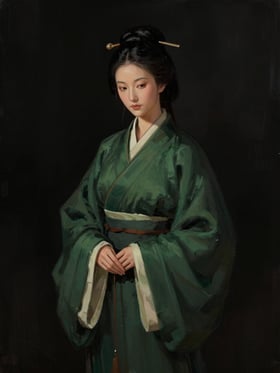
Lady Bu was Sun Quan’s favorite consort and bore him two daughters; she was posthumously honored as empress.
Life
History 3 vols.
On the boards
Where this person ranks on each board.
Historical Record
Lady Bu was the wife of Sun Quan, ruler of Wu. She was from Huaiyin in Linhuai and belonged to the same clan as Bu Zhi, chancellor of Wu. At the end of the Han dynasty, her mother took her to live in Lujiang. After Sun Ce captured Lujiang, mother and daughter crossed the river and came to Jiangdong. Lady Bu won Sun Quan’s favor because of her beauty and became the most favored woman in his inner quarters. She bore Sun Quan two daughters: the elder, Sun Luban, courtesy name Dahu, first married Zhou Xun, son of Zhou Yu, and later married Quan Cong; the younger, Sun Luyu, courtesy name Xiaohu, first married Zhu Ju and later married Liu Zuan.
Historical accounts say that she was not jealous by nature and often recommended others and treated them with warmth, and that she therefore remained in Sun Quan’s favor for a long time. After Sun Quan became king and then emperor, he once considered making her empress. But the officials advocated appointing Lady Xu, and Sun Quan hesitated for more than ten years without formally conferring the title. Even so, those in the palace called her Empress, and her relatives referred to her in memorials as the Empress of the Central Palace. Sun Quan’s eldest son, Sun Deng, was raised by Lady Xu. After Lady Xu was deposed, she lived in Wu, while Lady Bu was the woman most favored by Sun Quan. Sun Deng did not dare refuse gifts bestowed on Lady Bu’s family; after receiving them, he would bow in thanks.
On the wuzu day of the intercalary month in the first year of the Chiwu era, Lady Bu died. In the posthumous edict, Sun Quan expressed regret that he had not proclaimed her title sooner, describing her as respectful and diligent, generous and benevolent. He ordered an envoy to deliver the edict conferring the title of Empress upon her, and decreed that she share sacrificial offerings with the preceding empresses. She was buried at Jiangling.
In the Novel
The novel does not depict this person. The materials available provide no characterization of Lady Bu in the novel, so no episodes or traits can be added on that basis, nor can her historical life be recast as scenes from the novel. Any account of her should be limited to what is recorded in the Records of the Three Kingdoms: she was a consort favored by Sun Quan, bore him two daughters, and was posthumously granted the title of Empress.
Key Relationships
Sun Quan: Lady Bu won Sun Quan’s favor through her beauty and remained the most favored woman in his inner quarters for a long time. Sun Quan once wished to make her Empress, but hesitated for more than ten years because the officials proposed appointing Lady Xu. After Lady Bu died, Sun Quan posthumously granted her the title of Empress and expressed his grief and regret that he had not formally recognized her sooner in the edict.
Bu Zhi: They belonged to the same clan. The historical record notes this kinship but gives no further details of their dealings with each other.
Sun Luban and Sun Luyu: Both daughters were born to Lady Bu; the historical record gives their courtesy names and marital histories.
Sun Deng and Lady Xu: Lady Xu raised Sun Deng when he was young. After Lady Bu became favored, Lady Xu was deposed and lived in Wu. Sun Deng bowed when accepting gifts bestowed on Lady Bu’s family, while he would bathe before putting on clothes bestowed on Lady Xu. When Sun Deng was about to be appointed crown prince, he declined, saying, “If a crown prince is to be appointed, an empress should first be appointed.” When Sun Quan asked where his mother was, Sun Deng replied that she was in Wu, and Sun Quan fell silent. This episode shows how the dispute over the empress’s position intersected with relationships among the palace family, but the historical record does not say that Lady Bu took part in it personally.
Key Scenes
The unresolved question of the empress’s position: Sun Quan intended to make Lady Bu Empress, but the officials proposed Lady Xu, and the appointment was delayed for more than ten years. Those in the palace still called Lady Bu Empress, and her relatives referred to her in memorials as the Empress of the Central Palace. Her exalted status was already reflected in everyday forms of address, yet she was never formally given the title during her lifetime.
Posthumous appointment: Lady Bu died in the first year of the Chiwu era. In an edict, Sun Quan posthumously conferred on her the title of Empress and ordered her to share sacrificial offerings with the preceding empresses. The edict said that she had helped establish the ruler’s mandate and shared his labors, praising her respectfulness, diligence, generosity, and benevolence. It also frankly acknowledged Sun Quan’s regret that he had not proclaimed her title sooner. Her posthumous appointment and burial at Jiangling brought formal closure, after her death, to the long-unresolved question of her investiture as empress.
- Family

Continue
Sun Quan
Spouse