Eastern Wu · Director of the Secretariat; Junior Tutor
Sun Hong
–252
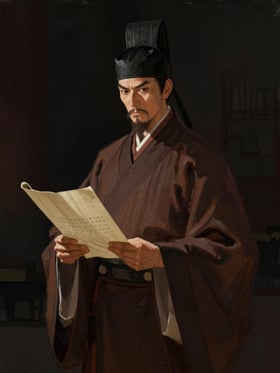
Sun Hong, an Eastern Wu official, was executed for plotting to forge an edict to eliminate Zhuge Ke after Sun Quan’s death.
Life
History 6 vols.
- Eastern Wu· Undated
On the boards
Where this person ranks on each board.
Historical Record
Sun Hong was a Director of the Secretariat in Eastern Wu. In Sun Quan’s later years, he also served as Junior Tutor and helped advise the young crown prince and attend to affairs entrusted to them. The Records of the Three Kingdoms states that when Sun Quan was gravely ill, he summoned Zhuge Ke, Sun Hong, Teng Yin, Lü Ju, Sun Jun, and others to entrust them with affairs of state. At the time, Sun Hong and Zhuge Ke were at odds. The day after Sun Quan died, Sun Hong secretly withheld the news of his death and planned to use a forged edict to eliminate Zhuge Ke. Sun Jun informed Zhuge Ke, who summoned Sun Hong to discuss affairs and had him killed during the meeting. Only afterward did Zhuge Ke announce Sun Quan’s death and observe mourning.
Sun Hong also left a distinct mark on court factional struggles. The Records of the Three Kingdoms describes him as “flattering, deceitful, treacherous, and devious,” and records that because he had long been at odds with Zhang Xiu, he slandered him, prompting Sun Quan to issue an edict ordering Zhang Xiu’s death. After Zhu Ju, who supported the crown prince Sun He and opposed the succession change, was demoted, Sun Hong took advantage of Sun Quan’s grave illness and used an edict to order Zhu Ju’s death. According to the Book of Wu cited in Pei Songzhi’s annotations, while ill, Sun Quan considered recalling Sun He, but Sun Hong, Quan Gongzhu, Sun Jun, and others firmly opposed the idea.
In a memorial discussing the political situation and the people’s livelihood, Lu Kai identified “Sun Hong’s raising of righteous troops” as the starting point of a policy. He argued that thereafter cultivation was neglected, fathers and sons were assigned separate labor duties, grain reserves were depleted, and the people were scattered, and called for the relevant practices to be halted and for the orphaned and vulnerable to be cared for. These are criticisms made in Lu Kai’s memorial, linking Sun Hong’s decisions to the labor levies and livelihood problems of the time; the source does not explain here what the “righteous troops” specifically involved.
In the Novel
The novel does not portray this figure. The available material provides no account of how Sun Hong is characterized in the novel, so it cannot support adding any actions or words for him there, nor can the factional struggles, slander, or coup on the ruler’s deathbed recorded in historical accounts be turned into episodes in the novel.
Key Relationships
Sun Hong’s relationship with Sun Quan was twofold: he was both a close aide and a trusted regent. When Sun Quan was gravely ill, he appointed Sun Hong Junior Tutor and summoned him to entrust him with affairs of state. Sun Hong also took a political side in the struggle between Sun He and Sun Ba. The Tongyu, cited in Pei Songzhi’s annotations, says that Sun Hong sided with Prince of Lu Sun Ba, opposing officials who upheld ritual propriety and supported the crown prince.
Sun Hong’s relationship with Zhuge Ke shifted from sharing the charge of the young ruler to a fatal conflict. After Sun Quan’s death, Sun Hong tried to conceal the death and eliminate Zhuge Ke with a forged edict. Zhuge Ke learned of the plot from Sun Jun, invited Sun Hong to a meeting under the pretext of discussing affairs, and had him killed. This was the culmination of both personal enmity and a struggle for power, and it brought dramatic upheaval to the regime even before Sun Quan’s death was publicly announced.
His relationships with Zhang Xiu and Zhu Ju illustrate how he used accusations to influence who lived or died: Zhang Xiu was ordered to die after Sun Hong slandered him; Zhu Ju was demoted for supporting Crown Prince Sun He, and Sun Hong later used Sun Quan’s illness as cover to issue a forged edict ordering Zhu Ju’s death.
Defining Scenes
The killing during the meeting after Sun Quan’s death is the most dramatic episode in Sun Hong’s biography. The day after Sun Quan died, Sun Hong had yet to announce the death and was planning to forge an edict to eliminate Zhuge Ke. Sun Jun informed Zhuge Ke first, and Zhuge Ke summoned Sun Hong to a meeting under the pretext of discussing affairs and had him killed on the spot. He then announced the death and observed mourning. The scene’s urgency comes from the narrow window during the transfer of power: before the regents had publicly announced the ruler’s death, they were already fighting to control the new political order.
Another key scene concerns Sun Quan’s repeated vacillation over the succession while ill. After Sun He was placed under house arrest, Zhu Ju and others risked their lives to remonstrate. Pei Songzhi’s annotations record that Sun Quan considered recalling Sun He when gravely ill, but Sun Hong and others firmly opposed it, and the proposal was eventually abandoned. Sun Hong was not involved only in the coup at the end of Sun Quan’s life; he was also at the heart of Eastern Wu’s succession disputes.
Any assessment of Sun Hong should preserve the distinctions among the sources: the descriptions of him as “flattering, deceitful, treacherous, and devious,” his slander leading to the deaths of Zhang Xiu and Zhu Ju, and his plot to eliminate Zhuge Ke with a forged edict are all found in relevant passages of the Records of the Three Kingdoms. Pei Songzhi’s annotations add that Sun Hong sided with Prince of Lu Sun Ba and opposed recalling Sun He. Lu Kai’s criticism of “Sun Hong’s raising of righteous troops” is a policy-related accusation in a memorial and should not be expanded into personal motives or specific military campaigns not mentioned in the source.
- Enemies
- Other
Combat
On the field
Duels, kills and executions as the texts tell them, counted separately for the Records and the Romance.
- RecordsJuan 57ExecutionZhu JuWon「弘為詔書追賜死」
Stratagems
Plans this person devised or saw through, as the texts tell them.
- Records
- 2 carried out · 2 worked · 0 turned down · 0 seen through
- RecordsSlander Zhang Xiu to His DeathSowing discordWorkedagainst Zhang XiuJuan 52「弘因是譖訴,下詔書賜休死」
- RecordsForged Edict to Order a DeathDeceptionWorkedJuan 57「弘為詔書追賜死,時年五十七」

Continue
Zhuge Ke
Enemy
Relationship timeline1 entry ▸
History · vol. 64
- Zhuge Ke§14
Enemy
Had long been at odds with Ke; kept secret the news of Quan's death and wanted to forge an edict to remove Ke