Cao Wei · Hostage Held Under House Arrest
Xu Shu's Mother
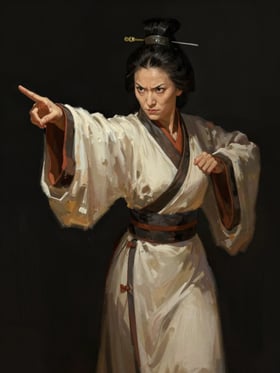
The Records of the Three Kingdoms omits Xu Shu's Mother; the novel has her rebuke Cao Cao, refuse his summons, then kill herself.
In the sources
Where the books name Xu Shu's Mother
Novel · ch. 36Romance of the Three Kingdoms
遂命左右捧過文房四寶,令徐母作書。徐母曰:「劉備何如人也?」…
Read the whole paragraph
遂命左右捧過文房四寶,令徐母作書。徐母曰:「劉備何如人也?」操曰:「沛郡小輩,妄稱皇叔,全無信義,所謂外君子而內小人者也。」徐母厲聲曰:「汝何虛誑之甚也!吾久聞玄德乃中山靖王之後,孝景皇帝閣下玄孫,屈身下士,恭己待人,仁聲素著。世之黃童、白叟、牧子、樵夫皆知其名。真當世之英雄也。吾兒輔之,得其主矣。汝雖託名漢相,實為漢賊,乃反以玄德為逆臣,欲使吾兒背明投暗,豈不自恥乎!」
Novel · ch. 36Romance of the Three Kingdoms
操然其言,遂不殺徐母,送於別室養之。程昱日往問候,詐言曾與徐庶結為兄弟,待徐母如親母;…
Read the whole paragraph
操然其言,遂不殺徐母,送於別室養之。程昱日往問候,詐言曾與徐庶結為兄弟,待徐母如親母;時常餽送物件,必具手啟。徐母因亦作手啟答之。程昱賺得徐母筆跡,乃倣其字體,詐修家書一封,差一心腹人,持書逕奔新野縣,尋問單福行幕。軍士引見徐庶。庶知母有家書至,急喚入問之。來人曰:「某乃館下走卒,奉老夫人言語,有書附達。」庶拆封視之。書曰:
Novel · ch. 37Romance of the Three Kingdoms
…徐母勃然大怒,拍案罵曰:「辱子飄蕩江湖數年,吾以為汝學業有進,何其反不如初也!…
Read the whole paragraph
庶拜謝而出。急往見其母,泣拜於堂下。母大驚曰:「汝何故至此?」庶曰:「近於新野事劉豫州,因得母書,故星夜至此。」徐母勃然大怒,拍案罵曰:「辱子飄蕩江湖數年,吾以為汝學業有進,何其反不如初也!汝既讀書,須知忠孝不能兩全。豈不識曹操欺君罔上之賊?劉玄德仁義布於四海,況又漢室之冑,汝既事之,得其主矣。今憑一紙偽書,更不詳察,遂棄明投暗,自取惡名,真愚夫也!吾有何面目與汝相見!汝玷辱祖宗,空生於天地間耳!」罵得徐庶拜伏於地,不敢仰視。母自轉入屏風後去了。
Historical Record
The Records of the Three Kingdoms does not mention her; Xu Shu's Mother appears only in the literary narrative of Romance of the Three Kingdoms. Her words and deeds, experiences, and fate cannot therefore be regarded as recorded in historical biographies.
In the Novel
Chapter 36 of Romance of the Three Kingdoms portrays Xu Shu's Mother as a resolute, discerning woman who holds fast to loyalty and righteousness. To bring Xu Shu away from Liu Bei, Cao Cao followed Cheng Yu's plan, brought her to Xu, treated her generously, and asked her to write a letter summoning her son. Xu Shu's Mother refused to submit. Instead, she sternly pointed out that Liu Bei treated worthy men with courtesy and was renowned for his benevolence, and said that Xu Shu Serves Liu Bei because he had “found the right lord.” She then rebuked Cao Cao to his face: “Though you claim the title of Han chancellor, in truth you are a traitor to the Han.” In this way, the novel depicts her as a woman with a clear sense of political legitimacy, unafraid to confront those in power.
After hearing her, Cao Cao did not kill Xu Shu's Mother but had her lodged in separate quarters. Cheng Yu pretended to become sworn brothers with Xu Shu, and through visits, gifts, and correspondence, obtained her handwriting. He then imitated it to forge a letter from home and deceive Xu Shu. After reading the letter, Xu Shu hurried back to Xu. When he saw his mother, he knelt before her, weeping. Learning that he had come because of the letter, Xu Shu's Mother concluded that he had failed to distinguish truth from falsehood and had lightly abandoned Liu Bei. She angrily rebuked him, saying that “loyalty and filial piety cannot both be fulfilled,” and accused him of “abandoning the light for darkness” and “bringing shame upon his ancestors.” She then left the hall and went behind a screen.
A little later, a family member reported that Xu Shu's Mother had hanged herself from a beam. By the time Xu Shu rushed to her, she had already died. Her suicide was a response to her son's being deceived into leaving Liu Bei, turning the novel's conflict over loyalty and righteousness from political persuasion into a tragedy of mother and son. All of the above episodes—her detention in Xu, her rebuke of Cao Cao, her scathing reprimand of Xu Shu, and her suicide—are inventions of the novel and must not be conflated with historical fact, since the Records of the Three Kingdoms does not mention her.
Key Relationships
- Xu Shu: Their mother-son relationship is at the heart of Xu Shu's Mother's actions and tragedy in the novel. Worried that her son was alone far from home, she became the opening Cao Cao exploited to lure Xu Shu back. Cheng Yu obtained her handwriting and forged a letter from home, prompting Xu Shu to return. Xu Shu's Mother then reproached him for failing to recognize the false letter and leaving Liu Bei, and ultimately took her own life. Their exchanges of advice, the deception, and their final parting are all unique to the novel.
- Cao Cao: He tried to use Xu Shu's Mother to summon Xu Shu back, treating her generously and urging her to write a letter. She, however, denounced him as a “traitor to the Han.” Cao Cao at one point intended to kill her, but later followed Cheng Yu's advice and lodged her in separate quarters. This confrontation and what Cao Cao did afterward are unique to the novel.
- Cheng Yu: He proposed exploiting Xu Shu's filial devotion to lure him back to Xu, then feigned closeness with Xu Shu's Mother to obtain her handwriting, which he used to forge a letter. Xu Shu's Mother did not willingly write to summon her son; the forged-letter scheme is key to the novel's mother-son tragedy. This relationship and scheme are unique to the novel.
- Liu Bei: Xu Shu's Mother praised Liu Bei's benevolence and righteousness and his courteous treatment of worthy men, and believed that Xu Shu Serves Liu Bei because he had “found the right lord.” Her rebuke of Xu Shu also centered on his leaving Liu Bei. This political judgment and mother-son conflict are unique to the novel.
Notable Scenes
- Refusing to Write in Xu: Cao Cao ordered someone to bring writing materials and asked Xu Shu's Mother to write a letter summoning Xu Shu. She first asked who Liu Bei was; after Cao Cao disparaged Liu Bei, she immediately defended him and bitterly berated Cao Cao. The demand that she “write a letter” underscores her resolute refusal to cooperate and shows that in the novel she is not merely a baited lure for others to manipulate, but a character who actively expresses her political stance. (Unique to the novel)
- Rebuking Her Son in the Hall: Xu Shu returned because of the forged letter and knelt before his mother in tears. When Xu Shu's Mother learned why he had come, she struck the table and angrily rebuked him, stressing that loyalty and filial piety could not both be fulfilled and blaming him for being deceived by a single forged letter and abandoning the light for darkness. She went behind the screen, turning Xu Shu's hasty return from a reunion into an irreparable farewell. (Unique to the novel)
- The End at the Beam: A family member reported that Xu Shu's Mother had hanged herself from a beam. By the time Xu Shu arrived, she had already died. The novel presents this as her decisive response to her son's mistaken judgment, and makes Cheng Yu's scheme to sow discord exact the price of a final separation between mother and son; the Records of the Three Kingdoms does not record this fate. (Unique to the novel)
Lines
- 演 ch.36 §12
「劉備何如人也?」
- 演 ch.37 §2→ Xu Shu
「汝何故至此?」
- Family
On the boards
Where this person ranks on each board.

Continue
Xu Shu
Kin