Background
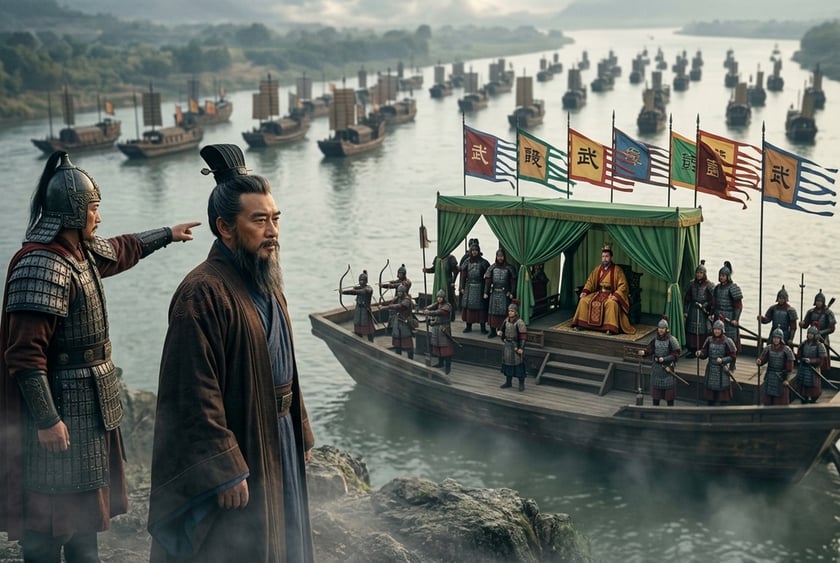
Ganluzhibian erupted in the summer of the fifth year of the Ganlu reign (260), in the fourth month — the most violent and unvarnished political incident in the transition of Caowei from "Simashi as regent" to "Simashi supplanting the Han." Its background traces to three earlier events: the Gaopinglingzhibian (249), in which Sima Yi eliminated the Cao Shuang faction and seized real power; the swift suppression of the Wang Ling rebellion by Sima Yi in the third year of Jiaping (251); and Sima Shi's deposition of Prince of Qi Cao Fang and installation of the Prince of Gaogui Township, Cao Mao, in the first year of Zhengyuan (254) — an act that on the surface was "enthronement of a worthy ruler" but in substance turned the imperial throne into a political toy the Simashi could manipulate at will. Cao Mao was young (only fourteen at his accession), yet was known for his love of learning, literary ability, and mastery of classical principles, earning considerable sympathy at the Caowei court; from the very start, the seeds of conflict between him and the Simashi were sown [c:17376]. By the Ganlu years, Sima Shi had died and Sima Zhao continued to hold power, being steadily advanced through the steps of investiture as Duke of Jin and receipt of the Nine Bestowments — the last ritual threshold before abdication. Cao Mao composed the poem "The Hidden Dragon," comparing himself to a dragon imprisoned "neither in heaven above, nor in the field below, but trapped in a well," repeatedly goading Sima Zhao with oblique taunts, until the relationship between the two men broke down entirely [c:17376].
Key Figures
The central figures of this event fall into three tiers. The first tier comprises the direct participants: Cao Mao (the puppet emperor who resolved to stake everything on one desperate gamble), Sima Zhao (the actual power-holder, caught between the political consequence of "regicide" and the political progress of "receiving the Nine Bestowments"), Jia Chong (Sima Zhao's most trusted Zhonghujun, who commanded the scene), Cheng Ji (the warrior under Jia Chong who personally killed the emperor), and Cheng Cui (Cheng Ji's younger brother, executed as a co-conspirator) [c:17377] [c:17378]. The second tier consists of pivotal actors at key junctures: Wang Jing (the Shangshu who was loyal to the imperial house and bitterly remonstrated with Cao Mao to bide his time; when the attempt failed he still refused to betray his lord and died under punishment); and Wang Shen and Wang Ye (the Shichong and Sanjichi Changshi who had been summoned in secret by Cao Mao to join the plot against Sima Zhao but who defected midway and reported the secret plan to Sima Zhao) [c:17377]. The third tier comprises those who handled the aftermath: Chen Tai (son of Chen Qun, who publicly recommended "beheading Jia Chong alone as apology to the realm," but Sima Zhao rejected this and instead ordered the extermination of Cheng Ji's three clans); and Sima Fu (Sima Yi's younger brother, who after the event pillowed Cao Mao's corpse and wept, blaming himself — "it is I who am guilty of killing Your Majesty" — a rare symbolic voice of ritual propriety from within the Sima clan itself) [c:17378].
Core Issue
On the surface, the core issue of Ganluzhibian was "the emperor was murdered," but in substance it was the greatest political risk the Simashi faced in transitioning from "powerful minister" to "supplanting the Han": regicide could not be concealed behind ritual propriety. Sima Zhao's dilemma was clear — killing Cao Mao would leave a permanent stain of "treachery against the lord," yet allowing Cao Mao to lead troops against him might cause the Luoyang palace guards to defect. He did not personally strike the blow at the scene (and could hardly have done so), but instead tacitly authorized Jia Chong to issue the final order; afterward he shifted the blame onto Cheng Ji alone, using the execution of Cheng Ji's three clans to retain a space of ritual exculpation [c:17378]. This entire sequence of dispositions reveals a complete "political killing — ritual innocence" division of labor: the true mastermind (Sima Zhao) → the on-site commander (Jia Chong) → the executioner (Cheng Ji) → the scapegoat (Cheng Ji himself). Chen Tai proposed beheading Jia Chong to satisfy the realm; Sima Zhao deliberated at length and refused [c:17378] — this exchange is itself the critical node of that division of labor: if Jia Chong were killed, the court would trace responsibility to the next layer (Sima Zhao himself); if Jia Chong were spared, Cheng Ji would be fixed in the record as "an individual acting out of barbaric initiative," and the chain leading to the mastermind would be severed.
Political Consequences
Ganluzhibian produced three profound consequences. First, the imperial authority of Caowei was in fact hollowed out completely. After Cao Mao's death, Sima Zhao enthroned the Prince of Changdao Township, Cao Huan, as emperor (the last Caowei emperor); Cao Huan made no political moves whatsoever throughout his reign and was the final purely nominal puppet of the Wei house — a political vacuum that prepared the ground for the "Sima supplanting Wei" transition five years later (265). Second, the Simashi paid an indelible price in terms of the "legitimacy of supplanting the Han": regicide cast a permanent shadow over the political narrative of the Sima family's succession after supplanting Wei, and even within the family, Sima Fu's "symbolic ritual dissent" preserved a degree of distance from the act of regicide [c:17378]. Third, the Wang Jing episode displayed the moral divergence among Wei officials: Wang Jing's family suffered punishment, and Wang Jing's mother calmly declared, "Who does not die? My only fear is dying in the wrong place" [c:17379] — a phrase that became a model for later narratives of loyalty and righteousness; meanwhile Wang Shen and Wang Ye, who betrayed the conspiracy and received Sima family rewards, became a cautionary counterexample. The contrast in the fates of these two groups profoundly shaped the model of political choice for scholar-officials at the Wei-Jin transition.
Counterfactual Analysis
If Cao Mao had heeded Wang Jing's counsel — to endure and wait for an opportunity, to scheme gradually — he almost certainly could not have reversed the overall situation, but he might have delayed his own death by several years, forcing the process of Sima supplanting Wei to proceed by a smoother path of abdication ceremony. That "smooth abdication" was precisely the script Sima Zhao had originally wished for: receive the Nine Bestowments — be enfeoffed as King of Jin — accept abdication — proclaim emperorship, each step with a ritual basis, with no need for bloodshed. Cao Mao's reckless gamble shattered this path, forcing Sima Zhao, after committing regicide, to delay his own advancement to kingship — with the result that Sima Zhao never lived to complete the supplanting of Wei in his own lifetime (he died in 265, and the proclamation of emperorship was completed by his son Sima Yan). From another angle, if Wang Shen and Wang Ye had not betrayed the secret, Cao Mao might have been able to strike down Sima Zhao's close family members or key subordinates in the moment before Sima Zhao had assembled his forces, engineering a reverse of the Gaopinglingzhibian — but this is too remote a hypothesis, since actual control of the Luoyang palace guards had long since passed to the Simashi. The true lesson of Ganluzhibian is this: once real power has entirely left the imperial house, a puppet emperor's personal courage can purchase only a tragic kind of dignity, not the recovery of political structure. The saying "Sima Zhao's ambitions are plain for all to see" endures because it precisely captures that quality of "doing what one knows cannot be done" — a political pathos that is almost the defining theme of every narrative of "the last stand of a puppet emperor."