Background
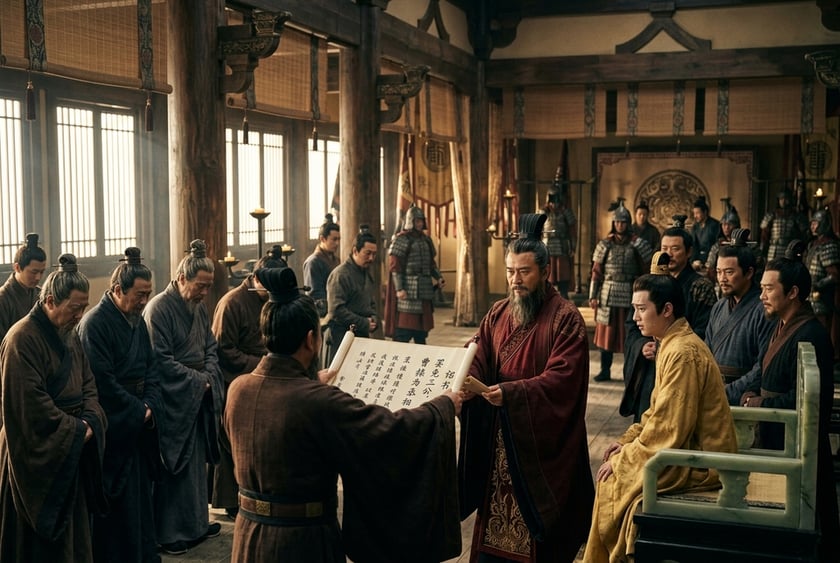
The deposition of the sixth year of Jiaping (254) was the second critical step on the chain of Simashiduoquan since the Gaopinglingzhibian (249). After Sima Yi wiped out the Cao Shuang faction in 249, Cao Fang retained the imperial throne, but real power had effectively transferred to Sima Shi. With Sima Yi's death in 251, Sima Shi succeeded as Grand General and consolidated power further. The defeat at the Battle of Dongxing in 252 briefly exposed the Sima clan's vulnerability in the outer court and gave the opposition a glimpse of opportunity. Li Feng, Xiahou Xuan, Zhang Ji, and others then began hatching a scheme to move against Sima Shi, with Cao Fang secretly supporting the plan from behind his imperial status. This covert line was exposed and bloodily crushed by Sima Shi at the very start of the sixth year of Jiaping, making the deposition a logically inevitable next step — since the Son of Heaven had already personally involved himself in a plot against the Sima clan, leaving him on the throne would be asking for future trouble.
Key Figures
Sima Shi, as Grand General and Director of the Secretariat, was the real architect of the deposition; he invoked the classic precedents of Yi Yin deposing Tai Jia and Huo Guang deposing the King of Changyi, framing the act of deposition as a justified narrative of "securing the altars of earth and grain in accordance with heaven and the will of the people" [c:17079]. Empress Dowager Guo was the crucial figure in the chain of legitimacy — by Han and Wei convention, deposing an emperor required an edict from the empress dowager to possess formal validity, and Sima Shi had no choice but to "report the matter to the empress dowager." Cao Fang was the target of deposition; the Romance portrays him as a dissolute ruler who "wallowed in licentiousness and kept the company of entertainers," but this image was essentially political propaganda manufactured by the coup faction [c:17079]. Sima Shi's clan elder Sima Fu was the key family spokesman, proactively seconding the proposal for the empress dowager to select Cao Mao as the new ruler, giving the deposition the appearance of a "broad consensus" within the Sima clan [c:17079].
Core Issues
The deposition centered on three core issues: the source of legitimacy, the choice of new ruler, and the handling of the deposed. On legitimacy, Sima Shi did not pursue the hard path of "directly executing the deposition" but instead routed through the empress dowager's edict and public deliberation among the ministers, demonstrating his acute sensitivity to public opinion and institutional form. On the choice of new ruler, he had originally intended to install Prince of Pengcheng Cao Ju — mature, steady, and easy to control — but the empress dowager rejected this on the grounds that "Cao Ju is this old body's uncle, and installing him would violate the etiquette between daughter-in-law and uncle-in-law," instead championing Cao Mao [c:17079]. This detail repays scrutiny: the empress dowager's true calculation was very likely a desire to install someone underage and of a closer generational relationship to herself, to preserve her own political standing. Cao Mao was fourteen at the time — precisely meeting this requirement. On the handling of the deposed, Cao Fang was re-enfeoffed as King of Qi, removed from the palace, and barred from appearing at court without an edict — a "soft treatment": not stripping him of all political rights as was done with the King of Changyi, yet falling short of outright execution, leaving some margin for maneuver, reflecting Sima Shi's ongoing need to guard against the collective backlash of the Cao clan after the coup.
Political Consequences
The deposition of Cao Fang produced several far-reaching consequences. First, it broke at the institutional level the psychological barrier of "an emperor cannot be deposed," so that the later Cao Mao, when pressed by Sima Zhao, felt compelled to personally drive a carriage out and take the field — because he knew clearly that being deposed meant political death [c:17079]. Second, it reinforced "the Yi-Huo precedent" as the standard rhetorical template for a powerful minister's coup: Dong Zhuo deposing Emperor Shao and Sima Shi deposing the King of Qi both invoked this example, and this formula continued to be used through the Eight Princes' War and the Western Jin period when Huan Xuan deposed Emperor An of Jin. Third, from the perspective of the Sima clan's power curve, the deposition directly dissolved the last trace of any countervailing force by the Caowei imperial clan in the central government — Xiahou Xuan, Li Feng, and Zhang Ji were all officials of standing and reputation, and their destruction meant the Cao clan fell completely silent on the political stage, clearing the way for the tragedy of Cao Mao's carriage charge in 260 and the final completion of Sima Yan's dynastic replacement in 265.
Counterfactual Analysis
Had Cao Fang not participated in Li Feng's conspiracy and instead passively accepted being sidelined, could he have met a better end? Most likely not. Sima Shi had already clearly understood after the Dongxing defeat in 252 that the imperial status itself was the most convenient banner for anyone dissatisfied with the Sima clan — as long as Cao Fang remained on the throne, any person opposed to the Sima clan had a legitimate Son of Heaven to rally behind. The true motivation for the deposition was not Cao Fang's personal faults but the severing of this political possibility. Conversely, had Empress Dowager Guo insisted on the original proposal of installing Cao Ju — an adult member of the imperial clan — the Sima clan would have faced an opponent with capacity, connections, and legitimacy, making the road to dynastic replacement considerably more tortuous. Cao Mao was young but resolute, and ultimately in the Ganlu Incident of 260 changed the rhythm of the dynastic replacement through his own death — but by then it was already too late to reverse the tide. The reason Caofangbeifei holds a textbook position in the history of Chinese politics is precisely that it completed the standardization of "the powerful minister invoking the Yi-Huo precedent to carry out a deposition" — transforming what had been an extreme and dangerous act, belonging only to exceptional circumstances, into a reusable institutional tool.