Background
During the Huangwu reign, Sunwu had only just shed its tributary relationship with Caowei, established its own reign name, and entered the "state-building" phase of institutional construction — official structures, the selection of officials, household registration, and land administration were all being rebuilt from scratch. This simultaneously meant that the great lineages of the Jiangdong region were at the peak of their penetration of central personnel: sons of the four great clans of Wu commandery — Gu, Lu, Zhu, and Zhang — packed every bureau and department, and nominations to the Three Directorates of the palace guard and to local administrative posts were almost entirely determined by pedigree. The underlying question in the Jiyanan was whether the Sunwu regime would be a dynasty dependent on the Jiangdong great clans, or whether it would rebuild a state bureaucratic system relatively independent of those clans.
Key Figures
Ji Yan was a native of Wu commandery but not one of the four great clans. He entered the selection of palace gentlemen through his connection as a client of Zhang Wen, who served as Grand Tutor to the Crown Prince. Zhang Wen himself was the most promising young rising star of Sunwu's early-middle period, and had once visited Shuhan on a diplomatic mission that left a deep impression on Zhuge Liang. Xu Biao shared Ji Yan's convictions and was the actual executor of the reform program. The opposing bloc was the four great clans of Wu commandery together with the elder statesmen who depended on them, and ultimately Sun Quan himself, who had the final say. Luo Tong represented the moderate faction — men who opposed "excessive harshness" but were unwilling to abandon reform altogether.
Core Issues
Ji Yan's targets were the "redundant officials" and "nominees placed through personal connections" within the Three Directorates' selection of palace gentlemen and the appointment of prefectural and commandery officials. In the institutional vocabulary of the late Han and San Guo period, these terms were synonymous with the legitimate channels through which great clans funneled positions to their sons-in-law and disciples. His specific methods included auditing the written records of the appointment process, publicly demoting or dismissing palace gentlemen deemed unfit, and showing particular severity toward sons of Wu commandery families. Luo Tong and others urged him to "value those who correct themselves and pardon minor faults" — in essence asking the reformers to accept "gradual adjustment under four-clan dominance." Ji Yan and Zhang Wen refused to compromise: they held that incomplete reform was no reform at all, and that the protection afforded by pedigree could only be pierced by strict and rigorous enforcement.
Political Consequences
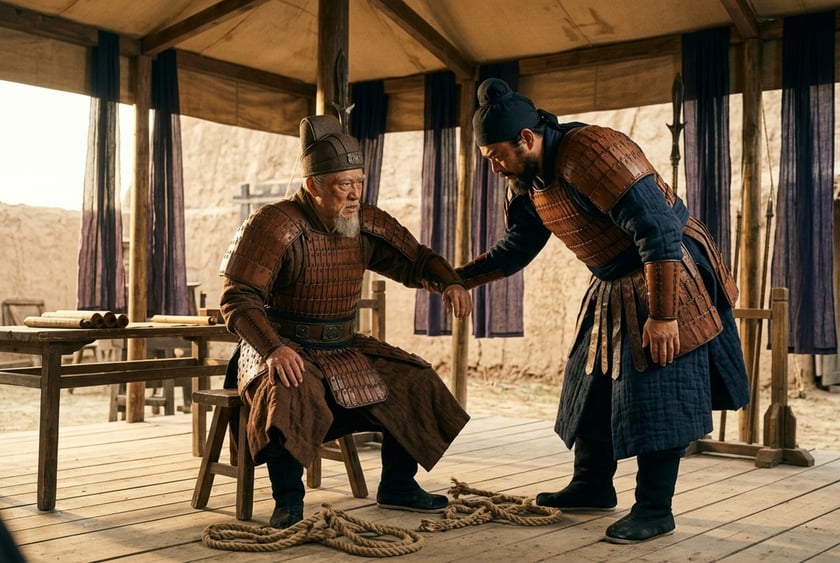
Sun Quan ultimately chose to side with the four great clans. The imperial edict characterized Ji Yan and Xu Biao as having "arrogated to themselves the power of commendation and denigration, acting willfully on private motives," and forced them to take their own lives. Zhang Wen was dismissed and returned to his home commandery on the charge of "associating with Ji Yan and forming a private faction," where he remained under prohibition for the rest of his life. This outcome procedurally protected the reputations of the four great clans while effectively closing the window for bureaucratic reform in Sunwu. From that point on, the relationship between Sunwu's central government and the Jiangdong great clans settled into a pattern of "marriage alliances, mutual accommodation, and mutual constraint." The later Lü Yi affair attempted to circumvent the clans through the office of the Bureau of Scrutiny, and the Ergongzhizheng tried to split the four clans by exploiting the struggle over the crown prince — all of these can be seen as the substitute instruments Sun Quan reached for after the failure of the Jiyanan.
Counterfactual Analysis
Had Sun Quan supported Ji Yan to the end and used imperial authority to force through the Three Directorates' reform, the Sunwu bureaucracy would have had a chance to develop a selection system resembling Caowei's Nine-Grade System but more independent of the local great clans. The cost, however, would have been enormous: the defection of the four great clans of Jiangdong might immediately have caused Gu, Lu, Zhu, and Zhang to withdraw from the court, severing the supply chain of military-diplomatic elite talent — above all the Lu Xun lineage — at a moment of ongoing military confrontation with Shuhan and Caowei. On the other side, had Ji Yan and Zhang Wen accepted compromise earlier, they could plausibly have returned to the center as clan proxies a decade later — but that would also have meant Sunwu permanently forfeited its one chance to fundamentally remake the official selection system. This failed reform ultimately made Sunwu the most deeply "clan-dominated" of the three polities, and laid the institutional groundwork for the continued expansion of great-clan power in the Jiangdong region even after Western Jin unified it.