Historical Record
Sima Fu, styled Shuda, played an important role on the political stage of late Cao Wei. As Grand Tutor, after Cao Mao was assassinated, he joined the General-in-Chief Sima Zhao, the Grand Commandant Wang Rou, the Minister over the Masses Gao Rou, and other senior ministers in memorializing the Empress Dowager to discuss the burial of the Duke of Gaogui District, Cao Mao. The initial edict held that "the Duke of Gaogui District acted perversely and against the way, brought ruin upon himself, and by the precedent of the King of Changyi's deposition for crime under the Han, should be buried with the rites of a commoner," intending to inter Cao Mao with commoner's rites. Sima Fu and the other ministers, however, voiced a different view. Bowing their heads, they declared that as subjects they had failed to uphold the altars of state or to check treachery, and they felt deep alarm and grief at it. They invoked the principle from the Spring and Autumn Annals that "the king has no outside," and cited the precedent of King Xiang, who dwelt in Zheng and, unable to serve his mother, was thereby cut off from his position. They acknowledged that Cao Mao had "acted lawlessly, nearly endangered the altars of state, brought about his own overthrow, and was cut off by both men and spirits; burial with commoner's rites truly accords with the old statutes." Yet they also pointed out that, considering the Empress Dowager's benevolence, although great principle so dictated, she would still show pity and compassion, and therefore "in our hearts we truly cannot bear it, and we hold that grace may be extended to bury him with the rites of a king." In the end the Empress Dowager adopted their advice and buried Cao Mao with royal rites. This account shows Sima Fu's ability, amid political turmoil, both to follow the law and to honor human feeling and ethics; it also reflects the strategy and calculation of the Sima faction within the Cao Wei regime in handling sensitive matters. Although the histories record few personal lines from Sima Fu, his stance and actions at crucial moments undoubtedly had a far-reaching effect on his historical standing.
In the Novel
In Romance of the Three Kingdoms, Sima Fu is given greater dramatic color and a deeper sense of loyalty and righteousness, especially at the critical junctures of the Cao Wei regime's transitions. He first appears after the death of Cao Cao. As the civil and military officials wept over Cao Cao's death, Sima Fu stepped forward and urged Cao Pi to "stay his grief and attend to the great matters," stressing that "the King of Wei has passed away and the realm is shaken; an heir-king should be set up early to settle the people's hearts—why merely weep?" This shows him, as a member of the Sima clan in the novel, possessing a clear grasp of the political situation and decisive judgment. When Cao Mao was deposed and Sima Shi sought to set up a new ruler, Sima Fu again played a key part. When Sima Shi proposed enthroning the Prince of Pengcheng, Cao Ju, the Empress Dowager suggested that the Duke of Gaogui District, Cao Mao, "is mild, respectful, and yielding—he may be enthroned." At this Sima Fu submitted: "The Empress Dowager's words are right. He may indeed be enthroned." Thus he brought about Cao Mao's accession. This differs from the low profile of the historical Sima Fu; in the novel he is more an active participant in state affairs with a measure of influence.
Yet the episode for which Sima Fu is best known in the novel comes after the assassination of the Duke of Gaogui District, Cao Mao. Entering and seeing Cao Mao's corpse, he was overcome with grief, pillowed his head on Cao Mao's thigh and wept, and cried out, "That Your Majesty was murdered is my crime!" This scene strongly conveys Sima Fu's loyalty to the Cao Wei imperial house: even with the Sima clan dominating the court, he did not forget the duty between sovereign and subject. Finally, when Sima Yan supplanted Wei to found the Jin, after Cao Huan abdicated, Sima Fu wept and bowed before Cao Huan, declaring firmly: "I am a subject of Wei, and to the end will not turn my back on Wei." He even declined the title of Prince of Anping conferred on him by Sima Yan. These episodes have no clear basis in the histories; they are the novel's artistic embellishment to fashion a tragic figure loyal to the old ruler, greatly elevating Sima Fu in readers' eyes and making him a model of one who held fast to his integrity in a turbulent age.
Key Relationships
* Cao Wei (serves): Sima Fu served the Cao Wei regime all his life and played important roles at several crucial junctures. Whether taking part in Cao Mao's burial in history or, in the novel, urging the enthronement of Cao Pi and supporting the enthronement of Cao Mao, he acted in his capacity as a Wei subject. Especially in the novel, his weeping prostration and his refusal of investiture as Wei fell pushed his loyalty to the utmost (novel only).
* Sima Shi (kin_of): As the younger brother of Sima Yi, Sima Fu was Sima Shi's granduncle. In the novel, when Sima Shi deposed and enthroned emperors, Sima Fu spoke in support of the Empress Dowager's choice of Cao Mao, showing his standing and a degree of voice within the Sima clan. Though the histories record little interaction between Sima Fu and Sima Shi, this kinship was undoubtedly an important backdrop to his political career.
* Cao Mao (serves): Sima Fu served as Grand Tutor during Cao Mao's reign. In history, after Cao Mao was assassinated, he strongly advocated burying him with royal rites, showing respect for his former lord. In the novel his loyalty to Cao Mao is drawn more deeply still: after Cao Mao was murdered, he pillowed his head on the corpse and wept, blaming himself, "That Your Majesty was murdered is my crime!"—a scene that became the hallmark of his loyal and righteous image (novel only).
Iconic Scenes
* Weeping over the corpse after Cao Mao's assassination: This is the most affecting scene of Sima Fu in Romance of the Three Kingdoms and the one that best embodies his loyalty and integrity. When the Duke of Gaogui District, Cao Mao, was killed, Sima Fu entered and saw the corpse, was overcome with grief, pillowed his head on Cao Mao's thigh and wept, and blamed himself: "That Your Majesty was murdered is my crime!" This scene shows not only his deep feeling for his former lord but also his helplessness and indignation as a Wei subject under the Sima clan's grip on power. There is no detailed record of it in the histories; it is the novel's consummate shaping of the character (novel only).
* Advocating burial of Cao Mao with royal rites: In history, after Cao Mao was assassinated, the court at first decided on commoner's rites. But Sima Fu, together with Sima Zhao and other ministers, jointly memorialized that although Cao Mao was guilty, in light of the Empress Dowager's benevolence and out of human feeling and ethics, "grace may be extended to bury him with the rites of a king." This act both preserved the dignity of the imperial house and reflected Sima Fu's prudence and humane consideration in handling a sensitive political matter—echoing the novel's portrayal of his deep feeling for Cao Mao, but weighted more toward political strategy and ritual propriety.
* Weeping and bowing to Cao Huan at the Wei-Jin transition: At the close of Romance of the Three Kingdoms, when Sima Yan supplanted Wei to found the Jin and Cao Huan abdicated, Sima Fu wept and bowed before Cao Huan, declaring plainly, "I am a subject of Wei, and to the end will not turn my back on Wei," and declined the title of Prince of Anping conferred by Sima Yan. This scene pushed Sima Fu's loyalty to its peak, making him the sole member of the Sima clan to openly profess loyalty to the old ruler at the moment of Wei's fall and greatly elevating his image as a tragic hero in the novel (novel only).
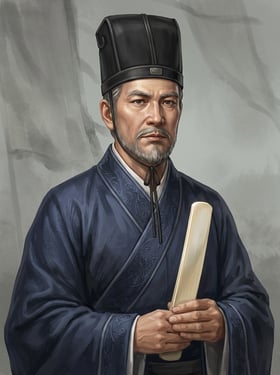
Portrait file
Character profile
- Character
- When the Duke of Gaogui Village, Cao Mao, was assassinated, Sima Fu was overcome with grief; he pillowed the corpse of Cao Mao on his lap and wept, blaming himself with the words, 'That Your Majesty was slain is this subject's crime,' showing his loyalty and compassion toward the house of Wei. He once urged the officials to establish an heir-king early to settle the people's hearts, and when Cao Huan abdicated the throne he bowed weeping, declaring of himself, 'To the end I will not betray Wei'; even when enfeoffed as Prince of Anping he would not accept it, showing his unwavering fidelity to the state of Wei.
- Life
- In the third year of Jiaping, Sima Fu was promoted from Minister of Works to Grand Commandant. When the Duke of Gaogui Village was assassinated, he grieved without end, pillowing the emperor's corpse on his lap and weeping.
- Anecdotes
- Sima Fu was the younger brother of Sima Yi, a senior minister who served through three reigns, holding such posts as Palace Steward, Prefect of the Masters of Writing, Grand Commandant, and Grand Tutor of Wei. He took part in the Incident at the Gaoping Tombs and once commanded the central army eastward to relieve the siege of Xincheng. After Cao Mao was assassinated, he requested that Cao Mao be buried with the rites of a prince.
Relationships
2 relationships
Family1
Lord & vassal1
Quotes
6 recorded lines · 3 featured
「臣身為魏臣,終不背魏也。」
This line shows Sima Fu's loyalty to the state of Wei, standing in sharp contrast to the Sima clan's usurpation.
「弒陛下者,臣之罪也!」
This is Sima Fu's declared stance on the death of Cao Mao, embodying his complex position amid the political struggle.
「伏見中令,故高貴鄉公悖逆不道,自陷大禍,依漢昌邑王罪廢故事,以民禮葬。臣等備位,不能匡救禍亂,式遏姦逆,奉令震悚,肝心悼慄。春秋之義,王者無外,而書『襄王出居于鄭』,不能事母,故絕之於位也。今高貴鄉公肆行不軌,幾危社稷,自取傾覆,人神所絕,葬以民禮,誠當舊典。然臣等伏惟殿下仁慈過隆,雖存大義,猶垂哀矜,臣等之心實有不忍,以為可加恩以王禮葬之。」
This memorial embodies Sima Fu's final respect for and defense of the Cao-Wei royal house after Cao Mao was killed.
Chapters5 回 ▸
- 史ch.4
- 演ch.78ch.109ch.114ch.119
Relationship timeline2 条 ▸
Inner monologues · AI-generated1 段 ▸
- I am Sima Fu, courtesy name Shuda. Living through the transition from Wei to Jin, I often held fast to the duties of a s
Life events3 ▸
- 0254-01-01 · LuoyangDeposition of Cao Fang· Advisor
- 0255-01-01 · LuoyangBattle of Taoxi· Commander
- 0266-01-01 · LuoyangWei-Jin Dynastic Transition· Witness