Origins
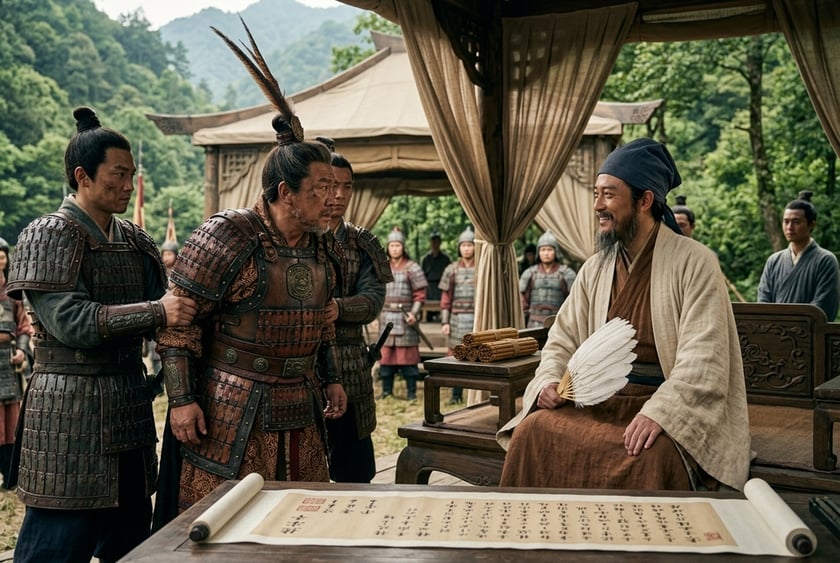
The origins of Zhugedanzhiluan cannot be understood by looking only at the immediate trigger of the 257 CE "edict summoning him to serve as Minister of Works" — one must look at the accumulated fissures between Shouchun as a regional command and the Simashi center over the preceding seven years. After Gaopinglingzhibian in the tenth year of Zhengshi (249 CE), the Sima family's policy toward regional governors shifted from "co-governance with the aristocratic clans" to "concentration of power among trusted subordinates." Guan Qiujian and Wen Qin had already risen in arms against Sima Shi for this very reason in the sixth year of Jiaping (254 CE) and died in the attempt. Zhuge Dan, assuming the post of General-Who-Conquers-the-East that followed, had watched his colleagues be executed before his eyes and had long been on guard. He petitioned the court for "an additional ten thousand garrison troops drawn from old generals of Huainan and an expanded reinforcement of Shouchun's defenses," while distributing his personal fortune lavishly to attract Huainan's heroes and strongmen — in substance turning Shouchun into his private fief. In the second year of Ganlu, Sima Zhao decided to summon Zhuge Dan to court to serve as Minister of Works — the standard procedure, by convention, for stripping a man of his military authority. On receiving the edict, Zhuge Dan immediately judged this to be a death trap of "summon then execute," and decided to strike first [c:17750].
Participating Forces
The Shouchun side: Zhuge Dan's own forces combined with the Huainan and Huaibei commandery garrison-farmer troops numbered approximately one hundred thousand, plus about forty or fifty thousand newly recruited from Yangzhou — claimed to be one hundred and fifty thousand in total. The Wu reinforcement main force was coordinated by Grand General Sun Lin; the front-line commander was Wen Qin and Tang Zi, with deputy commanders Quan Duan, Quan Yi, and Zhu Yi — approximately thirty thousand Wu troops entered the city, with another thirty thousand encamped outside at Anfeng as a flanking force [c:17751]. Sima Zhao's side: Sima Zhao personally led two hundred and sixty thousand troops conscripted from the four provinces of Qing, Xu, Jing, and Yu, and brought the Wei emperor's imperial train to Xiangcheng to legitimize the operation; Wang Ji commanded the siege forces, with Chen Qian, Shi Bao, Zhou Tai, Hu Lie, and Pang Hui leading separate forces to contain the Wu relief army. This troop ratio (Wei 260,000 versus Zhuge Dan's 150,000 plus Wu relief of 30,000) determined from the outset that Zhuge Dan could only fight defensively, counting on outside aid to sustain him.
Critical Turning Points
The first turning point was the entry of the Wu reinforcements into the city in the sixth month of the second year of Ganlu. Wen Qin, Tang Zi, and others led thirty thousand men through a gap in the encirclement on the southeast corner — still not fully closed by Wang Ji's forces — and broke into Shouchun. But once inside, Wang Ji's two hundred and sixty thousand troops sealed off the entire city in a complete encirclement — effectively converting the Wu reinforcements into "hostages sharing the besieged city" [c:17751]. The second turning point was the failure of Zhu Yi's external relief. Zhu Yi advanced northward from Lijiang to open the supply route, but was repulsed in succession by three Wei columns under Zhou Tai, Shi Bao, and Hu Lie, losing several thousand men. Most critically, Sun Lin, enraged by Zhu Yi's repeated failures to break through, actually executed Zhu Yi right in the field camp at Huoli — in effect personally executing what remained of the Wu external relief commander. From that point, the external relief completely collapsed. The third turning point was the falling-out inside the city between Wen Qin and Zhuge Dan. As grain ran out inside the city, Wen Qin proposed releasing all Wei-registered soldiers (northern men) from the city to conserve provisions. Zhuge Dan judged this to be a scheme of "disarming me while monopolizing the grain supply" and executed Wen Qin on the spot; Wen Yang and Wen Hu, seeing their father killed, immediately scaled the walls and surrendered to Wei. Sima Zhao generously rewarded the two brothers in order to shake the morale of those still inside the city — a move that broke Zhuge Dan's last psychological defenses.
Pacification and Outcome
In the second month of the third year of Ganlu (258 CE), the city's soldiers were too starved and weakened to hold their weapons. Zhuge Dan led his personal guards in a breakout attempt and was killed in action by the troops of Wei's Hu Fen; his head was sent to Luoyang and his three clans were exterminated [c:17750]. Tang Zi, Quan Duan, Quan Yi, and the other Wu commanders were captured or surrendered to the last man. Sima Zhao, accepting Zhong Hui's counsel of "do not butcher the Wu troops but release them back to the south as a show of magnanimity," released tens of thousands of Wu soldiers as a political card — a stroke whose destructive force far exceeded any military victory. It directly punctured Sun Lin's ruling legitimacy in Jiangdong; Sun Lin was subsequently tricked and eliminated by Sun Xiu. The defensive fortifications Zhuge Dan had built at Shouchun were demolished, the regional command system was completely abolished, and from that point on no Caowei regional command retained the power to challenge the center.
Historical Echoes
The significance of the end of Shouchunsanpan was this: it cleared away the last regional military command with real capacity to resist Simashi's move to replace Caowei. Guan Qiujian, Wen Qin, Zhuge Dan — three uprisings, three defeats — all sharing the underlying structure of "the old Wei military establishment, marginalized after Cao Shuang's fall" versus "the new Sima grandees," a conflict that with Zhuge Dan's death was declared to have ended in the complete victory of the Sima family. From that point, Sima Zhao's preparations for the dynastic transfer entered an accelerating phase: the Jingyuan era brought the titles of Duke of Jin, Prince of Jin, and the Nine Bestowments, and in the first year of Taishi (265 CE) Sima Yan formally accepted the abdication of the throne, with no effective armed resistance from regional forces appearing in the interim. On the other side, Sun Lin's execution of Wu relief commanders and the reputation — carried back by released Wu troops — that "Sima Zhao is more benevolent than Sun Lin" also accelerated the collapse of Eastern Wu's central court. Sun Xiu's elimination of Sun Lin and the suspicious, paranoid politics of Sun Hao's reign can all find their seeds in this campaign. One can say that the Battle of Shouchun determined not only the internal distribution of power in Wei but also, indirectly, rewrote the political landscape of Eastern Wu's second half.